
Understood: Support ADHD Kids
Understood for All, Inc.Parenting
4.4158.00 Reviews
- Version
- 2.20
- Installs
- 50.00K
- Age Rating
- Teen
Screenshots
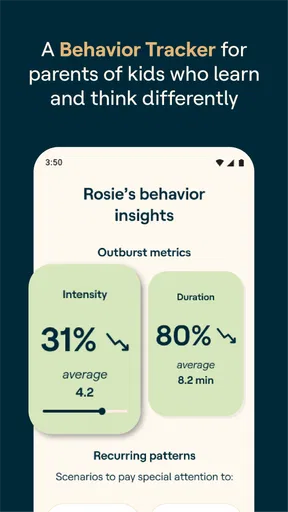
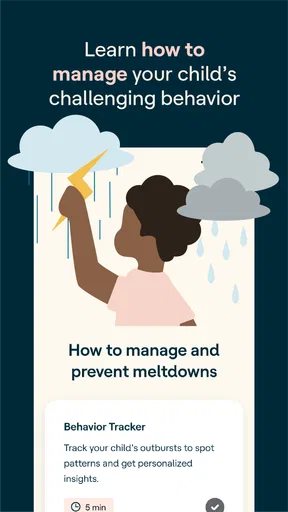
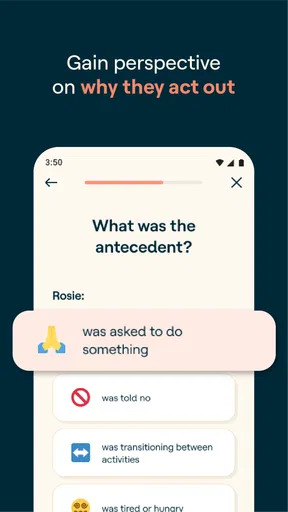
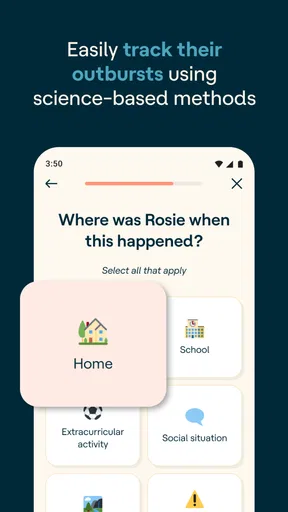
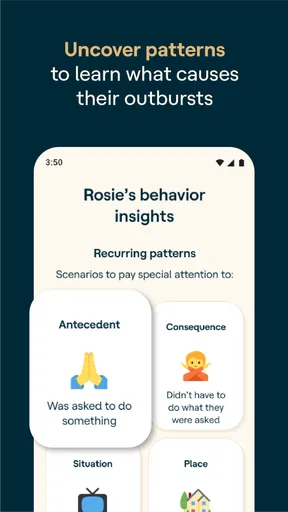
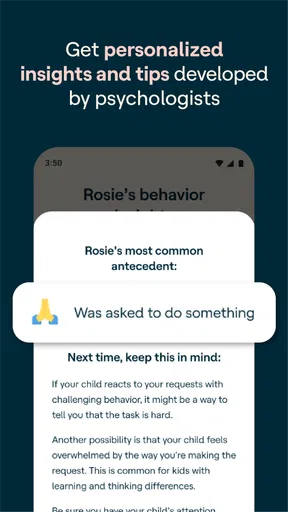
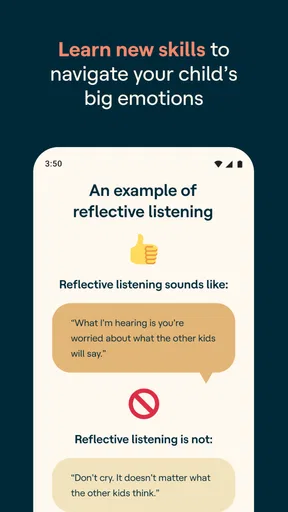
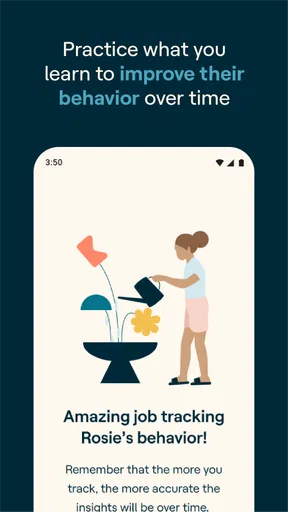
Our Review of Understood: Support ADHD Kids
 Analysis by Appyee
Living with a child who has ADHD often means trying to remember patterns while the day is still moving: a difficult morning, a smoother homework session, a sudden argument before bed. Understood: Support ADHD Kids is built for that exact kind of observation. It is a free parenting app from Understood for All, Inc., presented as a behavior tracker developed with psychologists for parents of children with ADHD. After using it as a practical record rather than a magic solution, I found its main value in helping turn scattered impressions into conversations you can actually have.
I would not describe it as a treatment app, a diagnostic tool, or a replacement for professional care. Its useful role is narrower and more realistic: it gives parents a place to notice behavior, reflect on what happened around it, and bring clearer examples to the people supporting the child. That distinction matters, especially when several adults share responsibility for the same child or when a family uses one device at different times.
How it fits into a real shared household
The most believable use case is not a parent spending half an hour analyzing every moment. It is a quick entry after something worth remembering. Imagine a school morning that starts with a forgotten backpack, an argument about getting dressed, and a rushed departure. Later, the child completes homework with fewer reminders than usual. Instead of keeping those details in your head, you can use the tracker to create a more concrete record of the day.
That record becomes more useful when it includes context rather than only a judgment such as “good” or “bad.” A behavior may look very different after poor sleep, a change in routine, a noisy afternoon, or an unusually demanding school task. I found that the app works best when I treat it as a prompt to observe the whole situation: what happened before, what the child did, and what followed. The benefit is not the act of tapping itself; it is the pause that encourages a more careful interpretation.
On a shared family device, I would keep the workflow deliberately simple. One adult can make the main entries, while another can review them during a calm moment. That avoids turning the phone into a running commentary on the child. If several people record observations, everyone should agree on what they are trying to notice. Otherwise, one person may track homework resistance while another records sibling conflict, leaving a collection of unrelated notes that is difficult to interpret.
The strongest habit is consistency without surveillance. A parent does not need to record every minor interruption. Choosing a small number of recurring situations makes the information easier to use and reduces the risk that the child feels constantly watched. For example, a family might focus on transitions, completing instructions, or settling for bedtime for a limited period, then review whether the pattern is becoming clearer.
What the tracker is good at noticing
The app makes most sense for repeated everyday situations rather than one-off emergencies. If a child regularly struggles when moving from play to schoolwork, entries can help a parent compare those moments across several days. The same applies to routines that seem unpredictable but may have recognizable triggers. This is more valuable than relying on memory, which naturally gives extra weight to the most dramatic incident.
A useful approach is to separate observation from interpretation. “Needed four reminders to start” is more actionable than “was unmotivated.” “Became upset when the activity ended” gives a professional or co-parent something specific to discuss. The app cannot make that distinction for you, so the quality of the result depends on how honestly and neutrally you use it.
I also see value in recording improvements, not just problems. If a child begins a task independently, recovers faster after frustration, or manages a transition with one reminder instead of several, those changes deserve attention. Tracking only difficult behavior can make family life feel worse than it is and may hide which approaches are helping.
Setting boundaries before anyone starts tapping
Because this is a parenting tool, the boundary question is important. A parent should decide in advance who is responsible for entries and what the notes are meant to accomplish. On a device shared between adults, I would avoid passing it around during a tense moment. A rushed entry made while everyone is upset is more likely to sound accusatory and less likely to describe what actually happened.
It is also worth agreeing on a review routine. Looking back at every entry repeatedly can encourage overanalysis, while never reviewing them turns the app into a digital drawer. A short weekly conversation may be enough for some families: identify one repeated pattern, one positive change, and one question to raise with a teacher or clinician. The application is most helpful when the record leads to a decision, not when collecting observations becomes the goal.
Shared-device use introduces another practical issue: the person holding the phone is not necessarily the person who understands the context. A co-parent may see a brief entry without knowing that the child had just returned from an exhausting activity. I would therefore keep wording factual and add enough context to prevent a misleading conclusion. The app should support family communication, not replace it.
Families should also decide what the child is told. Older children may appreciate knowing that adults are trying to understand difficult situations rather than secretly scoring them. Younger children may need a simpler explanation. The right approach depends on the child, but I would avoid presenting the tracker as a report card. Behavior tracking can support trust only when the child is treated as a person whose experience matters.
Coordinating home, school, and professional conversations
One of the app’s practical strengths is that it can give a parent more precise examples when speaking with other adults. A general statement such as “mornings are always terrible” is hard to act on. A pattern involving a particular transition, time of day, or type of demand gives the conversation somewhere to go. That does not prove a cause, but it can help everyone ask better questions.
I would use the tracker as a preparation tool before a meeting, not as evidence that settles an argument. If a teacher reports a different pattern from the one seen at home, that difference is useful. It may point to changes in structure, expectations, fatigue, social demands, or support. Trying to force both settings into one explanation would be a mistake.
A helpful coordination method is to bring a small selection of representative observations rather than overwhelming someone with a long history. Look for repeated situations and meaningful exceptions. The exception can be especially informative: perhaps the child manages a task well when instructions are brief, or transitions more smoothly when warned ahead of time. Those details can lead to practical experiments at home.
There is a trade-off here. More people contributing may create a broader picture, but it can also introduce inconsistent standards. One adult may call a behavior “completed independently,” while another counts it only if no reminder was given. Before sharing the tracking responsibility, agree on simple definitions. This is not a feature of the app so much as a discipline required to make its information reliable.
Age, trust, and the teen content context
The app carries a Teen content rating, and that is a useful reminder that the subject involves real family sensitivity. A child with ADHD is not automatically ready to discuss tracking in the same way as a teenager, and a teenager may strongly object to feeling monitored. I would consider maturity, privacy expectations, and the purpose of the tracking before involving the child directly.
For younger children, adults may use the app privately as a memory aid while keeping conversations focused on support. With older children, transparency becomes more important. Explaining what adults are watching for, how long they plan to do it, and how the information will be used can prevent the tracker from feeling like hidden surveillance. The goal should be to understand needs and test helpful routines, not to label the child.
Trust also affects the language used in entries. A note that reduces a child to a negative trait can influence how adults see later events. I recommend describing actions and circumstances, then recording what helped. This creates a fairer record and makes it easier to notice progress. It also protects against the common mistake of treating every difficult moment as proof of a permanent problem.
Parents should remember that the app does not replace a conversation with a qualified professional. If behavior raises concerns about safety, learning, mood, sleep, or family wellbeing, a tracker alone is not enough. Its observations may help organize that conversation, but they should not delay seeking appropriate support.
Where it feels more useful than ordinary alternatives
The usual alternative is a paper notebook, a notes app, or relying on memory. Paper can be flexible, but it is easy to leave at home and difficult to review consistently. A general notes app is quick, yet it does not naturally encourage a behavior-focused routine. Memory is convenient but selective, especially after a stressful day. This dedicated parenting app sits between those options: more purposeful than a blank note, but less demanding than a formal clinical record.
That middle ground is also its limitation. Parents who want detailed charts, extensive customization, shared professional dashboards, or a complete medical record may find it too narrow. I would choose a general planning system or a specialist service instead if the main need is scheduling, medication management, school communication, or formal documentation. This app is best when the question is, “What patterns are we seeing in everyday behavior, and how can we discuss them more clearly?”
It is also not the right choice for someone looking for instant parenting instructions. Tracking can reveal a pattern, but it does not guarantee that the next strategy will work. A family still has to decide what to change, try it consistently, and judge whether the result is genuinely better. That requires patience, and the app cannot supply it.
Practical ways to get better results
I would begin with one routine instead of trying to document the entire household. Pick a situation that happens often enough to compare, such as starting homework or leaving the house. Record the surrounding circumstances as neutrally as possible, then review after enough ordinary days have passed to avoid drawing conclusions from one unusually difficult event.
Next, track the response to a specific adjustment. If the family changes the order of a routine, gives a warning before transitions, or reduces the number of instructions delivered at once, note that context. This turns the app from a diary into a small, informal learning cycle. The important question is not simply whether behavior changed, but whether the change was repeatable and whether the child seemed less distressed.
Another non-obvious tip is to record successful recovery. A child may still become frustrated, but return to the task more quickly with support. If entries capture only whether frustration happened, that improvement disappears. Recording recovery gives parents a more balanced view and can highlight strategies worth keeping.
Finally, use the app to prepare questions, not accusations. Instead of telling a teacher or co-parent that they are handling things incorrectly, bring a pattern and ask whether they see the same thing. This keeps coordination collaborative and leaves room for different settings to produce different results.
Device fit, cost, and what to expect
The application is free, which lowers the barrier for parents who want to try structured observation without committing to a paid service. It requires Android 10 or later, so anyone using an older device should check compatibility before planning a household workflow. The current version is 2.20, and the app has reached over fifty thousand installs, with an average rating of 4.4 from more than five hundred ratings. Those figures suggest a modest but established audience rather than a tool used by nearly every parenting household.
The free price is especially appealing for a family testing whether behavior tracking is useful at all. There is little reason to build an elaborate system before knowing whether regular observation fits your routine. At the same time, free access should not be confused with a complete care platform. Parents who need extensive records or coordination across several professionals may eventually require something more specialized.
I would also keep expectations realistic about shared use. The app can support a household routine, but the family still needs to establish its own account boundaries, language, and review habits. It should not be handed to every adult without agreement about what belongs in an entry. Good coordination comes from a shared method, not merely from putting the same application on a device.
My household verdict
Understood: Support ADHD Kids is a thoughtful choice for parents who want to observe recurring behavior without turning the process into a formal clinical project. Its developer, Understood for All, Inc., places it in the parenting category, and that framing feels accurate: this is a practical support tool for everyday family decisions, not a diagnosis or a cure.
I would recommend it to a parent who often says, “I know there is a pattern, but I cannot explain it clearly,” especially when co-parents or professionals need a more specific picture. I would skip it if the main need is medication reminders, school administration, emergency support, or advanced multi-user case management. I would also avoid using it secretly as a behavior scorecard for an older child, because that can damage the trust the app is supposed to support.
Used with modest goals, neutral language, and clear household boundaries, it can make difficult routines easier to understand. The best result is not a perfect record. It is a calmer conversation, a better question, or one small change that makes the next morning more manageable.
Verdict
Strengths of Understood: Support ADHD Kids
- Clear tools help children understand routines and daily expectations.
- Parent-focused guidance makes it easier to support ADHD-related challenges.
- Activities are presented in a friendly, child-appropriate format.
- Useful reminders can encourage consistency at home and school.
- Content may help families discuss attention and behavior more openly.
Limitations of Understood: Support ADHD Kids
- Some advice may feel too general for children with complex needs.
- The app cannot replace professional assessment or personalized treatment.
- Certain features may require ongoing parent involvement to be effective.
- Content availability and usefulness may vary by age and ADHD symptoms.
- Some families may find subscriptions or paid resources expensive.
Similar Picks in This Category
View All
Family Space
Motorola Mobility LLC.3.9

شرطة الأطفال - مكالمة وهمية
Oub Apps4.1

Findmykids: Parental Control
LETEM LTD4.6

Pregnancy + | Tracker App
Philips Electronics UK Limited4.8

Policía de niños - para padres
Kids police4.7

Pregnancy App
Amila4.9
Frequently Asked Questions
What is Understood: Support ADHD Kids, and who is it designed for?
Understood: Support ADHD Kids is an educational and support app intended to help parents, caregivers, and educators better understand children with ADHD and other learning or thinking differences. It may provide practical information, strategies, and guidance for everyday situations such as routines, schoolwork, behavior, communication, and emotional support. The app is primarily a resource for adults, rather than a replacement for professional care or a standalone treatment for children.
Can Understood: Support ADHD Kids diagnose or treat ADHD?
No. The app should not be used to diagnose ADHD, prescribe medication, or replace an evaluation by a qualified healthcare professional. Its content is designed to improve understanding and offer practical ideas for supporting a child at home or school. If you are concerned about attention, behavior, learning, or emotional development, speak with a pediatrician, psychologist, psychiatrist, or school specialist who can provide an appropriate assessment and personalized recommendations.
What kind of support and information can parents find in the app?
The app focuses on useful, everyday support for children who have ADHD or related challenges. Depending on the available content and version, parents may find explanations of common symptoms, suggestions for building routines, tips for improving focus, ideas for handling transitions, and advice about communicating with teachers. It can also help caregivers recognize a child’s strengths and choose practical strategies instead of relying only on discipline or punishment.
Is Understood: Support ADHD Kids suitable for teachers and other caregivers?
Yes, the information can also be useful for teachers, tutors, relatives, and other adults who regularly support a child. The guidance may help caregivers understand why a child struggles with organization, impulse control, working memory, or completing tasks. However, strategies should be adapted to the child’s age, needs, and educational plan. Teachers should also coordinate with parents and qualified professionals rather than treating the app as an official school intervention.
Is the app free, and should I consider privacy or account requirements before downloading?
Before downloading, check the current Google Play or App Store listing because availability, pricing, subscriptions, in-app purchases, and account requirements can change by region and app version. Review the permissions requested and the developer’s privacy policy, especially if a child’s information may be entered. Avoid sharing sensitive medical or identifying details unless necessary, and remember that app content should complement—not replace—professional advice and trusted child-support services.
